
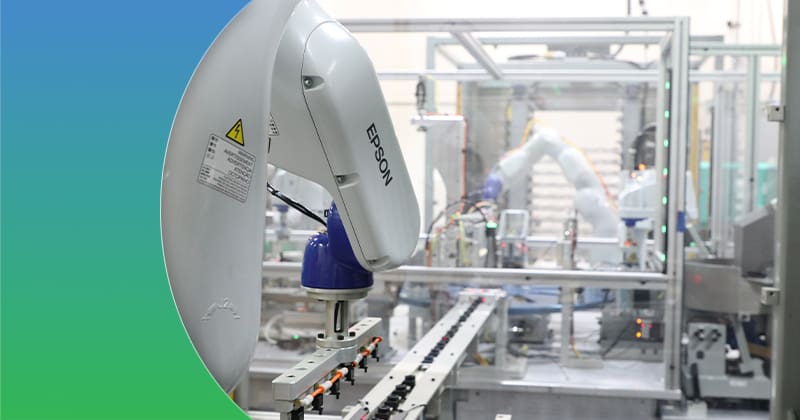
The injection molding industry is on a steady growth trajectory, expected to reach $235.7 billion by 2029 with a compound annual growth rate (CAGR) of 4.1%. As manufacturers navigate a rapidly evolving landscape, several key trends are set to shape the industry in 2025. Read on to explore how Industry 4.0 technologies, shifting global supply chains, sustainability efforts, and automation advancements are reshaping the future of injection molding – and what manufacturers need to do to stay competitive.
- Industry 4.0 Integration: Smarter, More Connected Manufacturing
Industry 4.0 has been a buzzword for years, but its real-world applications in injection molding are accelerating. Manufacturers are using real-time production monitoring, IoT-enabled machinery, and AI-driven analytics to improve efficiency, reduce downtime, and optimize production parameters.
Sussex IM has seen firsthand the benefits of real-time monitoring. As Megan Tzanoukakis, President/CEO put it: “We implemented real-time production monitoring for all of our machines in 2024. We can instantly see if a press is running slow or fast, and shift leadership can address the issue in real time. The visibility and ability to react to problems right away is really important.”
Beyond monitoring, AI-driven process optimization is gaining traction. AI is being used to fine-tune injection parameters, predict machine maintenance needs, and enhance quality control, helping manufacturers reduce waste and maintain consistent part quality. However, rather than replacing human oversight, these technologies are fostering better collaboration between people and machines.
- Reshoring and Tariff Impacts: Strengthening Domestic Supply Chains
Reshoring has been gaining momentum for over a decade, but 2025 presents new challenges and opportunities for manufacturers. In a recent survey, 69% of manufacturers had already begun reshoring their supply chains, and 93% planned to accelerate their efforts. Several factors are driving this shift:
- Uncertainty surrounding global trade tariffs is prompting companies to reevaluate overseas sourcing strategies. Tariff fluctuations on imported materials and components are making domestic production more appealing.
- Consumer preference for “Made in the USA” products is growing, leading brands to source more components from U.S. suppliers.
- Automation advancements are reducing the cost gap between domestic and offshore production, making reshoring more viable for cost-conscious companies.
As a U.S.-based, family-owned injection molder, Sussex IM is well-positioned to support companies looking for a reliable, domestic partner. With a proven track record in high-volume production and value-added operations, Sussex IM helps customers strengthen their supply chains while maintaining high quality and efficiency.
- Sustainability: A Business Imperative, Not a Buzzword
Sustainability is no longer just a differentiator; it’s an industry expectation. Customers, regulatory bodies, and end consumers are demanding lower carbon footprints, energy-efficient processes, and responsible material choices.
Key sustainability efforts for injection molders in 2025 include:
- Energy-efficient manufacturing: Companies are investing in all-electric and hybrid injection molding machines, which use significantly less energy than traditional hydraulic presses.
- Recycled and bio-based materials: Brands are shifting toward post-consumer recycled resins and biodegradable alternatives to reduce reliance on virgin plastics.
- Process optimization to reduce waste: AI and automation are helping manufacturers minimize scrap rates, ultimately conserving resources and cutting costs.
 At Sussex IM, sustainability is woven into every stage of production, from material selection to energy-efficient processes. This dedication to environmental responsibility was recently recognized with an EcoVadis Bronze medal, placing Sussex IM in the top 35% of all reporting companies for environmental performance and reporting, with a rating valid through February 2026.
By helping customers develop environmentally responsible solutions, Sussex IM supports both regulatory compliance and long-term business sustainability.
- Robotics and Automation: Driving Efficiency and Quality
With labor shortages and rising costs, automation remains a top priority in injection molding. In 2025, industrial robots and advanced automation will continue to enhance production efficiency, quality, and consistency.
Emerging trends in automation include:
- Collaborative robots (cobots): Unlike traditional robotic arms confined to safety cages, cobots work alongside human operators, handling repetitive tasks like part removal and assembly.
- Automated quality control: Vision inspection systems powered by AI are becoming more advanced, allowing manufacturers to detect defects in real time and maintain higher quality standards.
- Lights-out manufacturing: Some operations are moving toward fully automated, unattended shifts, reducing labor dependency and increasing uptime.
Sussex IM has long embraced automation as a tool for improving productivity and ensuring repeatable, high-quality production. From robot-assisted part handling to automated decorating and assembly, Sussex IM continues to invest in technology that benefits both efficiency and customer satisfaction.
Looking Ahead to 2025
As the injection molding industry evolves, manufacturers must adapt to stay ahead of the curve. Industry 4.0, reshoring, sustainability, and automation will all play critical roles in shaping the future of plastic manufacturing.
For companies looking for a strategic partner that understands these trends and delivers high-quality, efficient, and scalable injection molding solutions, Sussex IM is ready to help. Contact us today to discuss your next project.